 Hitesh Spara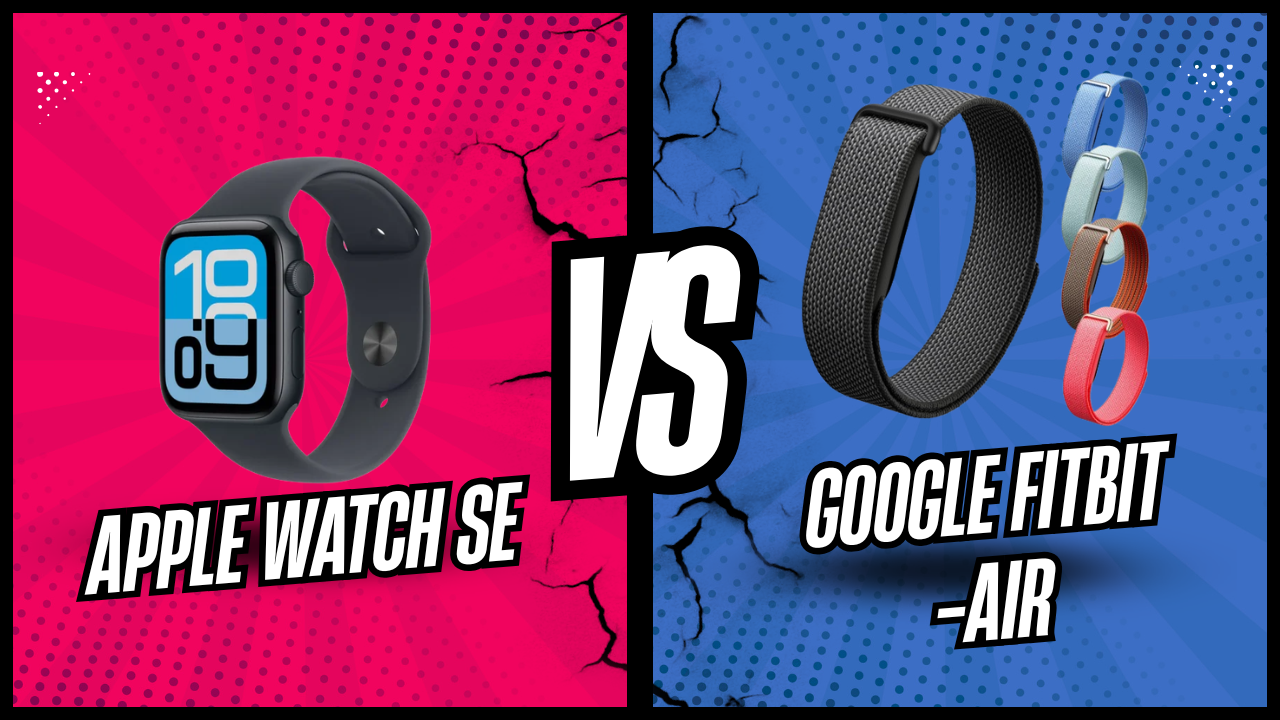
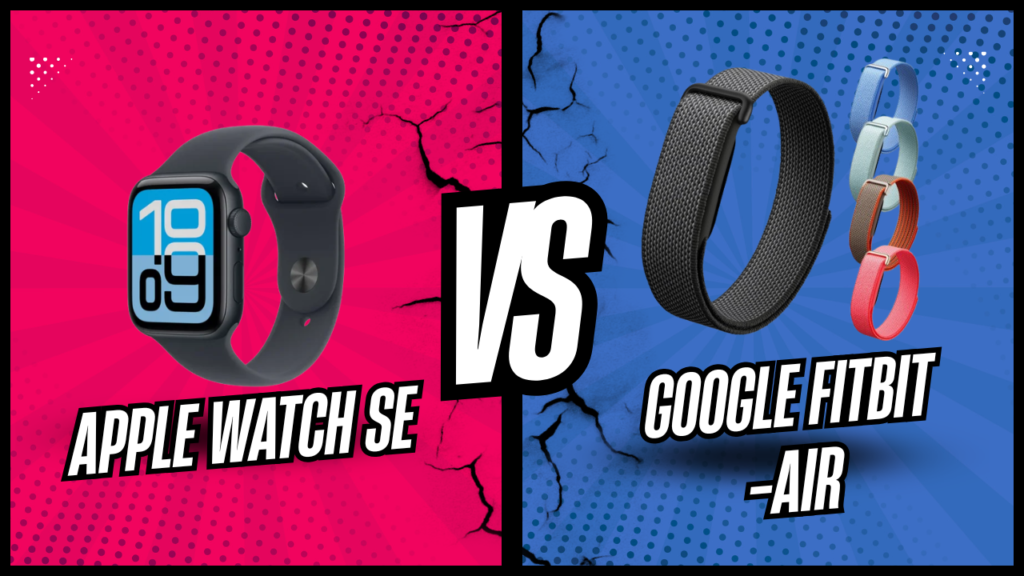
I recently started testing the Apple Watch SE and Google Fitbit Air at the same time.
My goal was simple:
If I wear both devices to bed every night, will they actually agree on how much I slept — and more importantly, on Deep Sleep and REM sleep?
Google positions the Fitbit Air as a lightweight, screenless tracker designed for 24/7 wear, including sleep tracking, Sleep Score and Sleep Stages.
So I wore both devices for five nights, from 9 August to 13 August 2026.
And the results were interesting.
Apple Watch SE vs Google Fitbit Air: 5-Day Sleep Data
| Date | Google Fitbit Air | Apple Watch SE | Difference |
|---|---|---|---|
| 9 Aug | 7h 42m | 7h 27m | Fitbit +15m |
| 10 Aug | 5h 10m | 5h 10m | Same |
| 11 Aug | 5h 57m | 5h 58m | Apple +1m |
| 12 Aug | 7h 10m | 6h 57m | Fitbit +13m |
| 13 Aug | 9h 00m | 8h 38m | Fitbit +22m |
| 5-Day Average | 7h 00m | 6h 50m | Fitbit +10m |
The first thing that surprised me was just how close they were.
Over five nights:
Google Fitbit Air average: 7h 00m
Apple Watch SE average: 6h 50m
That is only around a 10-minute average difference per night.
For total sleep duration, I would say both devices were remarkably consistent.
But Sleep Stages Tell a Completely Different Story
This is where the comparison gets much more interesting.
| Sleep Stage | Google Fitbit Air Avg. | Apple Watch SE Avg. |
|---|---|---|
| Awake | 12m | 17m |
| REM | 1h 25m | 1h 12m |
| Light / Core | 4h 21m | 4h 54m |
| Deep Sleep | 1h 15m | 44m |
Look at that Deep Sleep difference.
Google Fitbit Air says I averaged:
1 hour 15 minutes of Deep Sleep
Apple Watch SE says:
44 minutes of Deep Sleep
That’s a difference of approximately 31 minutes every night.
And that’s not a small difference.
Night 1: Fitbit Said 77 Minutes Deep, Apple Said 35 Minutes
On 9 August, both devices agreed reasonably well on total sleep.
Google Fitbit Air:
7h 42m total sleep
Apple Watch SE:
7h 27m total sleep
Only a 15-minute difference.
But look at Deep Sleep:
Google Fitbit Air: 1h 17m
Apple Watch SE: 35m
That’s a massive 42-minute difference.
Same person.
Same night.
Same wrist-based tracking concept.
Completely different interpretation of Deep Sleep.
Night 2 Was Even More Interesting
On 10 August, something happened that makes this comparison especially useful.
Both devices recorded:
Exactly 5h 10m of sleep.
There was basically zero disagreement about how long I slept.
But:
Google Fitbit Air Deep Sleep: 1h 11m
Apple Watch SE Deep Sleep: 32m
That’s a 39-minute difference in Deep Sleep even though both devices agreed perfectly on total sleep.
This tells me something important.
The major difference isn’t necessarily detecting whether I’m asleep.
The major difference is:
How each company’s algorithm classifies that sleep.
Google Fitbit Air Consistently Shows More Deep Sleep
Here is my Deep Sleep comparison across all five nights:
| Date | Google Fitbit Air | Apple Watch SE | Difference |
|---|---|---|---|
| 9 Aug | 1h 17m | 35m | Fitbit +42m |
| 10 Aug | 1h 11m | 32m | Fitbit +39m |
| 11 Aug | 1h 17m | 44m | Fitbit +33m |
| 12 Aug | 1h 16m | 1h 03m | Fitbit +13m |
| 13 Aug | 1h 15m | 45m | Fitbit +30m |
This pattern is very clear.
Every single night, Google Fitbit Air reported more Deep Sleep than Apple Watch SE.
Over five days:
Fitbit Air average: 75 minutes
Apple Watch SE average: 44 minutes
That’s almost 70% more Deep Sleep reported by Fitbit Air.
Apple Watch Shows More Core Sleep
There’s another pattern.
Apple Watch tends to put more of my sleep into its Core category.
Five-day average:
Google Fitbit Air Light Sleep: 4h 21m
Apple Watch SE Core Sleep: 4h 54m
Apple recorded approximately 33 minutes more Core/Light sleep each night.
So it’s possible that periods classified as Deep Sleep by Fitbit are being classified as Core Sleep by Apple.
That’s why comparing sleep-stage numbers between different brands can become confusing very quickly.
REM Sleep Was Different Too
REM wasn’t as dramatically different as Deep Sleep overall, but there were still some big individual-night differences.
Five-day average:
Google Fitbit Air: 1h 25m
Apple Watch SE: 1h 12m
Fitbit recorded roughly 13 minutes more REM sleep per night on average.
But on 12 August:
Google Fitbit Air recorded:
1h 54m REM
Apple Watch SE recorded:
1h 02m REM
That’s a 52-minute difference.
Again, both devices were tracking the same night.
So Which One Is Accurate?
This is probably the biggest question.
After this five-day test, I don’t think the right way to look at these devices is:
“Fitbit says 75 minutes and Apple says 44 minutes, so which exact number is correct?”
A better way is:
“Which device gives me the most useful and consistent trend over time?”
Neither device is measuring sleep the same way as a clinical sleep laboratory.
A wearable uses sensors and algorithms to estimate your sleep stages.
That means Deep Sleep, REM and Light/Core should be treated as estimates — not exact laboratory measurements.
Google itself says Fitbit Air calculates Sleep Score and Sleep Stages using its tracking technology and algorithms.
What I Would Trust Most
Based on my five-day comparison:
Total Sleep Duration — ✅ Very Useful
Both devices were impressively close.
Average difference:
Only around 10 minutes per night.
For questions like:
“Did I sleep 5 hours or 8 hours?”
Either device appears perfectly useful for day-to-day tracking.
Bedtime and Wake-Up Time — ✅ Very Close
Both devices also detected roughly the same overall sleeping window.
Deep Sleep — ⚠️ Treat as an Estimate
This was easily the biggest disagreement.
I would not make health decisions based on one night’s Deep Sleep number.
REM Sleep — ⚠️ Also an Estimate
The five-day averages weren’t extremely far apart, but individual nights sometimes differed significantly.
One Advantage of Google Fitbit Air
One thing I like about the Google Fitbit Air concept is that it’s screenless.
There are no notifications or apps constantly competing for attention on your wrist.
Google designed it specifically as a lightweight tracker intended for continuous wear, including during sleep, and says it can offer up to a week of battery life.
For someone who mainly wants:
sleep + activity + recovery + health tracking
rather than another smartwatch screen, that’s an interesting approach.
My 5-Day Verdict
After wearing both, here’s how I’d summarize the test:
| Category | Result |
|---|---|
| Total sleep duration | 🟢 Very similar |
| Sleep/wake timing | 🟢 Very similar |
| Awake detection | 🟢 Relatively close |
| REM sleep | 🟡 Some differences |
| Light/Core sleep | 🟡 Noticeable differences |
| Deep sleep | 🔴 Very different |
The biggest lesson from this experiment wasn’t that one device is necessarily “wrong.”
It was this:
Two wearables can agree almost perfectly on how long you slept while completely disagreeing on what happened during that sleep.
For me, that’s the most important thing to understand when looking at smartwatch sleep data.
Instead of obsessing over:
“Why did I only get 44 minutes of Deep Sleep last night?”
I’d rather watch the trend:
Is my sleep improving over the next 7, 30 or 90 days?
That’s where wearable sleep tracking becomes genuinely useful.
Final Score After 5 Days
Total Sleep Tracking: Apple Watch SE 🤝 Google Fitbit Air
Sleep Stage Agreement: Very different
Deep Sleep Difference: Google Fitbit Air consistently reports more
Best approach: Pick one device and compare its trends over time rather than comparing individual stage numbers across brands.
I’ll continue testing both for a longer period because five days gives us an interesting first look — but 30 days should tell a much better story.